

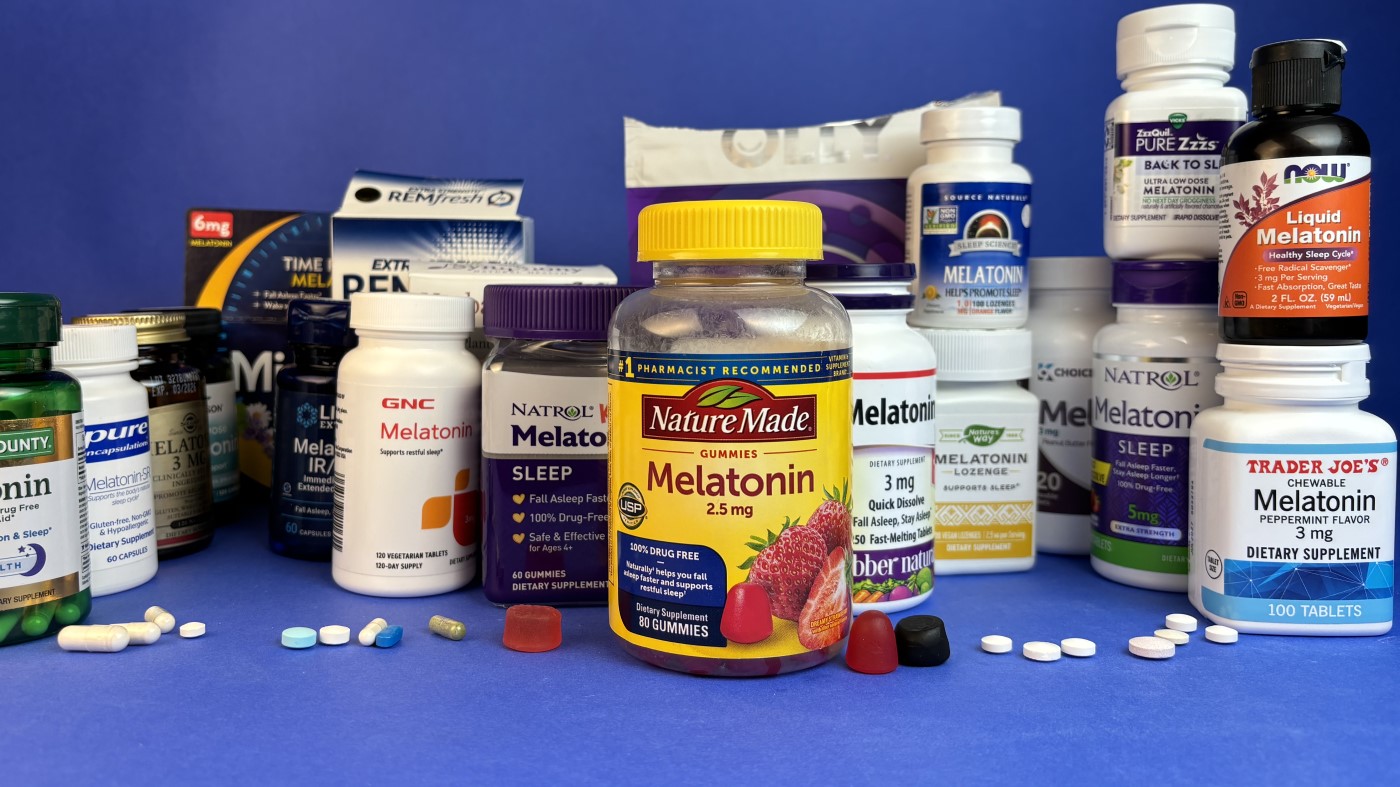
Melatonin has become one of the most widely used sleep-related supplements worldwide. People reach for it to ease jet lag, support better sleep, or help regulate their internal clock. But like any supplement, it’s worth understanding what it is, how it works, and where the benefits and limitations truly lie.
This guide pulls together evidence from reputable sources to give you a clear, grounded overview of melatonin — without hype, confusion, or guesswork.
What Is Melatonin?
Melatonin is a hormone produced by the pineal gland in response to darkness. It signals to the body that it’s time to wind down, coordinating the circadian rhythm — the internal 24‑hour clock that governs sleep, metabolism, immune function, and cellular repair.
Melatonin regulates over 500 genes and plays a major role in antioxidant defense systems. Production declines sharply with age — by age 50, levels are roughly half of what they were at 20, and by age 80, levels can be ten times lower than in adolescence.
This age‑related decline is one reason researchers are exploring melatonin’s role in aging and neurodegeneration.
When Should You Use Melatonin?
Melatonin is not a universal sleep aid. It’s most effective when used for specific situations, including:
1. Jet Lag
Helps shift the internal clock when traveling across time zones.
2. Delayed Sleep Phase Syndrome
Useful for people whose natural sleep cycle is shifted later than desired.
3. Shift Work
May help night-shift workers adjust to irregular sleep schedules.
4. Occasional Insomnia
Short-term use can support falling asleep more easily, though it’s not a cure for chronic insomnia.
5. Circadian Rhythm Disorders
Sometimes used under medical guidance for conditions affecting sleep timing.
6. Occasional sleep onset difficulty
Helps people fall asleep faster, especially when melatonin levels are low.
FoundMyFitness emphasizes melatonin’s role in circadian alignment, which is critical for metabolic health, immune function, and brain detoxification processes like the glymphatic system
The Sleep Foundation highlights that melatonin is most effective when the issue is related to circadian timing rather than general sleeplessness.
Dosage: How Much Melatonin Should You Take?
General information from Drugs.com indicates that melatonin is available in many forms — tablets, capsules, liquids, and gummies — and that short-term use is generally safe for most adults.
Because individual responses vary, many experts recommend starting low:
- 0.5–1 mg: Often enough for circadian rhythm support
- 1–3 mg: Common for general sleep support
- 5 mg+: Sometimes used for jet lag or under medical guidance
Timing matters: melatonin is typically taken 30–60 minutes before bedtime, but for circadian rhythm shifts, it may be taken earlier in the evening, 3-4 hours before bed.
Important: This is general information only — always check with a healthcare professional for personalized guidance.
Potential Benefits
Evidence-based reviews show several potential benefits:
1. Improved Sleep Onset
Helps people fall asleep faster, especially when melatonin levels are low.
2. Jet Lag Relief
Supports faster adjustment to new time zones.
3. Non-Addictive
Melatonin is not habit-forming, unlike some sleep medications.
4. Antioxidant Properties
Some research suggests melatonin may have antioxidant effects, though this is not its primary use.
5. Support for Certain Medical Conditions
Used in some cases for chronic pain, depression, or dementia, though evidence varies and should be guided by a clinician
6• Antioxidant and anti‑inflammatory effects
Melatonin increases antioxidant enzymes like glutathione and superoxide dismutase, and reduces biomarkers of oxidative stress.
7• Mitochondrial support
Melatonin is produced inside mitochondria and helps regulate energy production and free radical balance.
8• Blood pressure reduction
Supplementation has been shown to reduce both systolic and diastolic blood pressure.
9• Improved clinical outcomes
- surgical recovery
- pregnancy‑related complications
- cancer paitents
Melatonin and Dementia Risk: What the Evidence Suggests
This is where things get especially interesting.
The link between sleep quality, circadian rhythm, and dementia risk.
- Poor sleep impairs the glymphatic system, the brain’s nighttime waste‑clearance mechanism.
- This system removes beta‑amyloid and tau, the proteins associated with Alzheimer’s disease.
- Circadian disruption accelerates neurodegeneration.
Because melatonin regulates circadian rhythm and enhances sleep quality, researchers believe it may indirectly reduce dementia risk by improving glymphatic clearance.
Direct neuroprotective effects
- reduces oxidative stress
- reduces inflammation
- protects mitochondria
- regulates genes involved in cellular repair
These mechanisms are all implicated in dementia pathology.
Age‑related decline matters
Since melatonin levels drop dramatically with age — up to 10× lower by age 80 — supplementation may help restore circadian and antioxidant function in older adults.
Is there direct evidence of reduced dementia risk?
Current evidence is associative, not conclusive:
- Melatonin improves sleep and circadian alignment — both strongly linked to lower dementia risk.
- Melatonin has neuroprotective properties in animal and mechanistic studies.
- Clinical trials are ongoing, but no definitive prevention claim can be made yet.
Still, the biological plausibility is strong, and Rhonda Patrick consistently emphasizes sleep and circadian health as major levers for cognitive longevity.
Potential Risks and Side Effects
While melatonin is generally considered safe for short-term use, it’s not risk-free.
Common side effects include:
- Daytime drowsiness
- Headache
- Dizziness
- Nausea
- Vivid dreams
These effects are noted by Drugs.com as common reactions to melatonin supplementation.
Who Should Be Cautious?
- Pregnant or breastfeeding individuals
- People taking medications that interact with melatonin (e.g., blood thinners, immunosuppressants)
- Individuals with epilepsy or autoimmune disorders
- Children — unless under medical supervision
Long-term safety data is still limited, so ongoing use should be discussed with a healthcare provider.
Practical Tips for Using Melatonin Wisely
- Start with the lowest effective dose.
- Use melatonin for specific sleep timing issues, not as a nightly crutch.
- Pair it with good sleep hygiene: dark room, consistent schedule, limited screens before bed.
- Avoid taking it in the middle of the night — it may disrupt your natural rhythm.
- If sleep issues persist, seek professional guidance.