
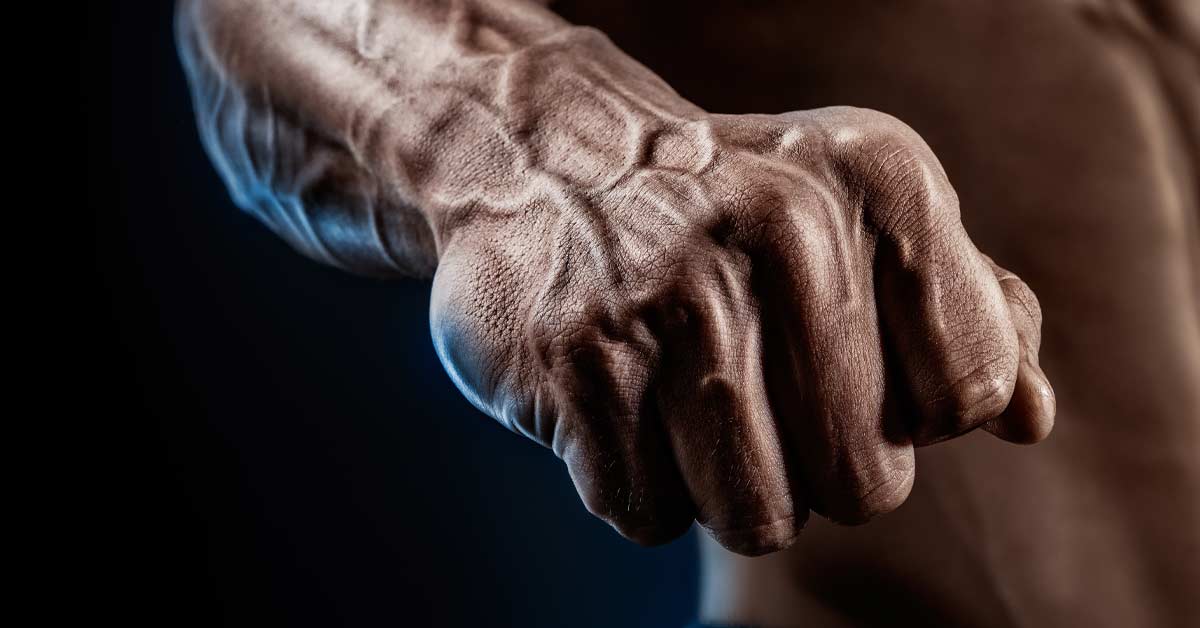
How hard you can squeeze your hand might not seem like a big deal. But over the past decade, grip strength has emerged as one of the simplest and most powerful markers of how well we’re likely to age. Large studies have linked a weaker grip with a higher risk of heart disease, disability and early death.
The good news is that grip strength is easy to measure and very trainable. In this article we’ll look at what the research says, what grip strength is really telling us, and how to build a stronger grip as part of a balanced programme.
Why researchers care about grip strength
Grip strength is measured with a simple handheld device called a dynamometer. You squeeze as hard as you can for a few seconds, and it records your force in kilograms. It’s quick, cheap and reliable, which makes it ideal for large studies.
What the big studies found
The PURE study (2015). Published in The Lancet, this study measured grip strength in nearly 140,000 adults across 17 countries and followed them for around four years. Every 5 kg drop in grip strength was associated with a 16% higher risk of death from any cause. Grip strength was also a stronger predictor of death from any cause and from heart disease than systolic blood pressure.
UK Biobank (2018). A study in the BMJ of around half a million UK adults found that lower grip strength was linked with higher risks of death and of cardiovascular disease, respiratory disease and several cancers, even after accounting for other lifestyle factors.
What grip strength is really telling us
It’s important to be clear about one thing: your hands aren’t keeping you alive. Grip strength is a marker, not a cause. It reflects your overall muscle strength, how active you are, your nutrition and your general health.
That’s why simply squeezing a stress ball all day won’t add years to your life. What matters is the whole-body strength that a strong grip usually represents. Grip strength is a useful window into:
- Overall muscle mass and strength. People with stronger grips tend to be stronger everywhere.
- Sarcopenia. Grip strength is one of the main tests doctors use to screen for age-related muscle loss.
- Independence. A weak grip is linked with more difficulty with everyday tasks, from opening jars to carrying shopping, and with a higher risk of falls and disability.
How grip strength changes with age
Grip strength generally peaks in our 30s and then slowly declines, with the drop speeding up from our 50s and 60s. But that decline isn’t fixed. People who keep lifting, carrying and staying active hold on to much more of their strength than those who don’t.
How to test your grip
Hand dynamometer. This is the gold standard. Many physios, gyms and trainers have one, and they can compare your result against norms for your age and sex. Ask us about testing yours at your next session.
Dead hang. Hang from a pull-up bar with your arms straight and time how long you can hold on. Many coaches use 30 seconds as a reasonable first target, with 60 seconds or more being very good. Only try this if your shoulders are healthy.
Farmer’s carry. Pick up a heavy dumbbell or kettlebell in each hand and walk. How far can you go before your grip gives out?
Whichever test you use, the most useful comparison is with yourself. Retest every couple of months to see your progress.
How to build a stronger grip
The best grip training is part of a full-body strength programme. Here are some of the most effective exercises:
- Farmer’s carries. Walk with a heavy weight in each hand for 20 to 40 metres. Simple, brutal and brilliant for grip, posture and core.
- Dead hangs. Hang from a bar for as long as you can, building up over time. If a full hang is too much, keep your feet lightly on the ground or a box.
- Deadlifts and rows. Heavy pulling exercises challenge your grip with every rep. Try to avoid using lifting straps for your lighter sets.
- Towel or thick-handle holds. Wrapping a towel around a bar or dumbbell handle makes it harder to grip and builds hand strength fast.
- Plate pinches. Pinch two weight plates together, smooth sides out, and hold for time.
- Everyday strength. Carry the shopping bags, do the gardening, and lift things properly. Real-life tasks count.
How often? Two or three times a week is plenty. Your forearms recover quickly, but they still need rest days to get stronger.
Practical tips
- Train your whole body. Grip improves fastest when it’s part of a programme that includes legs, back, chest and core.
- Progress gradually. Add a little weight, distance or time each week.
- Balance it out. Gently stretch your fingers and wrists, and include some extension work, such as opening your fingers against a rubber band.
- Eat enough protein. Muscle, including the muscles in your forearms, needs protein to grow and repair, especially after 40.
- Track it. Keep a note of your dead hang time or carry distance and watch it improve.
Who should be careful
If you have arthritis, carpal tunnel syndrome, tennis or golfer’s elbow, or a recent hand, wrist or shoulder injury, start gently and get advice from your GP or physio. Grip training should feel challenging, not painful. Dead hangs aren’t suitable for everyone with shoulder problems.
Conclusion
Grip strength is a simple, powerful window into your overall health and how well you’re likely to age. It’s not magic, but it reflects the strength, activity and independence that help us live longer and better. The good news is that it responds quickly to training, at any age.
Want to know how your grip measures up, or need a strength programme that builds real-world strength from your hands to your hips? Book a free consultation with Advantage Fitness, call us on 022 0246 145, or email enquire@advantagefitness.co.nz.
This article is general information only and is not medical advice. If you have a medical condition or injury, check with your GP or physio before starting a new exercise programme.
References
- Leong D.P. et al. (2015). Prognostic value of grip strength: findings from the Prospective Urban Rural Epidemiology (PURE) study. The Lancet. https://doi.org/10.1016/S0140-6736(14)62000-6
- Celis-Morales C.A. et al. (2018). Associations of grip strength with cardiovascular, respiratory, and cancer outcomes and all cause mortality: prospective cohort study of half a million UK Biobank participants. BMJ. https://doi.org/10.1136/bmj.k1651